647 Miller Rd Ste 100, Mansfield, TX, 76063
Bonded & Insured
Mansfield, TX

Foundation Repair in Mansfield, TX Built for North Texas Expansive Clay

Mansfield sits on some of the most active clay soil in the country. The dark Houston Black and Eagle Ford clays under your yard swell after a wet May and shrink during a 100°F August, and your slab moves right along with them. That's why so many homes here show stair-step brick cracks, sticking doors and sloping floors within their first ten years. Mansfield Foundation Repair Solutions stabilizes slab and pier-and-beam foundations with steel and concrete piers, crack repair, floor leveling and drainage fixes. Every repair starts with real measurements, not guesswork, so you only pay for what your house actually needs.

Since 2020 we've worked on Mansfield homes of every age, from early-1900s pier-and-beam houses near Historic Downtown to post-tension slabs in South Pointe, Twin Creeks and Walnut Creek Country Club. We also serve Kennedale, Venus, Everman, Midlothian and Pantego, where the soil, the housing and the permit rules all differ. Each inspection includes floor elevation readings, photos and a clear written report you can share with buyers, lenders or your insurance provider.

  • Serving Mansfield homeowners since 2020
  • Bonded
  • Fully insured
  • Financing available
Free Estimate

Request Your Free Estimate

No obligation. Fast, honest quotes.

Prefer to talk? Call (817) 402-2718 — your details are never shared.

Credentials & Certifications BondedInsuredFinancing available
What We Do

Foundation Repair Services for Mansfield Homes and Businesses

We fit the repair to the problem, not the other way around. Every recommendation is based on elevation data, a walk-through and what Mansfield's clay is actually doing under your property. Here's what we offer, from a single crack to a full pier-and-beam rebuild.

★ Specialty

Slab Foundation Repair & House Foundation Repairs

We stabilize and lift settled slab-on-grade foundations, both post-tension and conventionally reinforced, which covers most Mansfield homes. Our goal is to stop ongoing movement and return the slab to practical level without over-piering.

We use pressed concrete piles or steel piers driven to load-bearing strata, placed where the elevation survey shows settlement. Then we lift carefully while monitoring interior cracks and plumbing, and backfill and compact every access hole.

Mansfield's Houston Black and Eagle Ford clays move the perimeter beam most. We focus piers where edge-drop and tree settlement actually happen, and we account for the Austin Chalk transition toward Midlothian, where depth to firm strata changes.

Best for: Homeowners seeing brick cracks, sticking doors, sloping floors or a buyer's inspection flag on a slab home.

Explore
★ Specialty

Pier and Beam Foundation Repair

We restore raised-floor homes by re-leveling beams, replacing failed piers and fixing the moisture problems underneath. It's a different skill set than slab work, and older Mansfield-area homes need it.

We re-shim with durable steel shims and replace rotted wood or settled block piers with concrete pier pads. Damaged beams and joists get sistered or replaced, and the floor is adjusted in stages to protect plaster and trim.

Historic Downtown Mansfield and the 1940s–60s neighborhoods of Everman, Forest Hill, Arlington and south Fort Worth are full of pier-and-beam homes on aging supports. We repair them while respecting original framing.

Best for: Owners and investors with bouncy, sagging or sloping floors in older raised homes.

Explore

Foundation Raising, Concrete Foundation Leveling & Concrete Slab Leveling

We bring settled foundations and slabs back toward level so doors close, floors flatten and cracks stop spreading.

We use hydraulic lifting on installed piers for structural raising and controlled leveling for interior and exterior slabs, guided by before-and-after elevation readings.

Seasonal movement means timing matters. We plan lifts around Mansfield's wet and dry cycles and coordinate leak testing so leveling doesn't hide or cause plumbing damage.

Best for: Homes with measurable floor slope, interior doors that bind, or settled slab sections.

Explore

Foundation Inspection

We give you a thorough evaluation of your foundation's condition with floor elevation readings, photos and a clear written report.

Our team takes a digital elevation survey of the entire floor and checks the exterior for brick, grading and drainage issues. We also do an interior crack and door review and note trees and plumbing risk factors.

In Mansfield's hot resale market, this documentation helps with TREC disclosures, buyer negotiations and insurance questions. It also helps tell normal seasonal movement apart from real structural trouble.

Best for: Buyers, sellers, new homeowners and anyone wondering whether a crack is a problem.

Explore

Foundation Crack Repair, Concrete Floor Crack Repair, Foundation Patching & Concrete Foundation Sealing

We seal and repair cracks in slabs, beams and floors to keep water out and restore surface integrity.

We use epoxy or polyurethane injection, routing and sealing, patching compounds, and penetrating or surface sealers on exposed concrete.

Mansfield cracks often open in August and close in April, so we measure first, then match the repair to whether the crack is cosmetic or active.

Best for: Hairline to moderate cracks, exposed beam faces and slabs that let in moisture.

Explore

Stem Wall Repair, Foundation Wall Repair, Concrete Wall Crack Repair & Concrete Block Foundation Repair

We repair cracked, bowed or displaced perimeter walls, stem walls and block foundations.

We rebuild or re-point block, inject cracks, reinforce walls and underpin settled sections.

These issues are common in older pier-and-beam and early slab homes in Arlington, Grand Prairie and Kennedale, where block perimeters sit on shifting clay.

Best for: Older homes with cracked skirting walls, stepped block cracks or leaning stem walls.

Explore

Concrete Foundation Repair, Poured Concrete Foundation Repair, Concrete Foundation Reinforcement & Concrete Pier Foundation Repair

We restore and strengthen poured concrete foundations, beams and existing concrete piers that have cracked, spalled or lost support.

Our methods include beam repair, adding reinforcement, replacing or supplementing failed piers, and resurfacing deteriorated concrete.

Early slab homes in older service-area cities were often built with little steel and minimal soil prep. Reinforcement helps them handle the clay's movement.

Best for: Older or under-built foundations, damaged beams and previously repaired homes.

Explore

Concrete Slab Repair & Concrete Slab Leak Repair

We open, repair and restore slabs affected by leaks or localized damage, and we coordinate with licensed plumbers for the pipe work.

We coordinate hydrostatic or pressure testing, do precise slab breakout or tunneling for access, and finish with compacted backfill and a structural concrete patch.

Post-Uri freeze damage and aging under-slab lines in 30-year-old Mansfield homes make this common. Texas law requires a licensed plumber for the pipe repair itself.

Best for: Homes with suspected slab leaks or heaved floor sections.

Explore

Crawl Space Repair & Crawl Space Foundation Construction

We repair damaged crawl spaces and build new crawl-space foundations for additions or rebuilds.

We handle drainage correction, vapor barriers, ventilation upgrades, pier and beam replacement, and new pier-and-beam framing.

Wet North Texas springs flood poorly drained crawl spaces in older Mansfield and Fort Worth homes, which rots beams and softens pier soils.

Best for: Damp, musty crawl spaces and raised-floor additions.

Explore

Foundation Drainage

We control water around your foundation so the clay stays at a steady moisture level.

Our drainage work includes French drains, surface drains, downspout extensions, positive regrading and root barriers.

Sloped lots near Walnut Creek and Joe Pool Lake need it most. We help prepare HOA submittals for drainage work in master-planned communities.

Best for: Ponding, erosion, recurring cracks and protecting a completed repair.

Explore

Garage Foundation Repair, Driveway Foundation Repair & Concrete Repairs

We level and repair garage slabs, driveways, walkways and other flatwork that has cracked or sunk.

We use slab leveling, crack repair, section replacement and perimeter support where it's needed.

Garages on the low side of Mansfield's sloped lots and driveways near big trees settle often.

Best for: Trip hazards, sinking driveway aprons and cracked garage floors.

Explore

Foundation Installation & Foundations

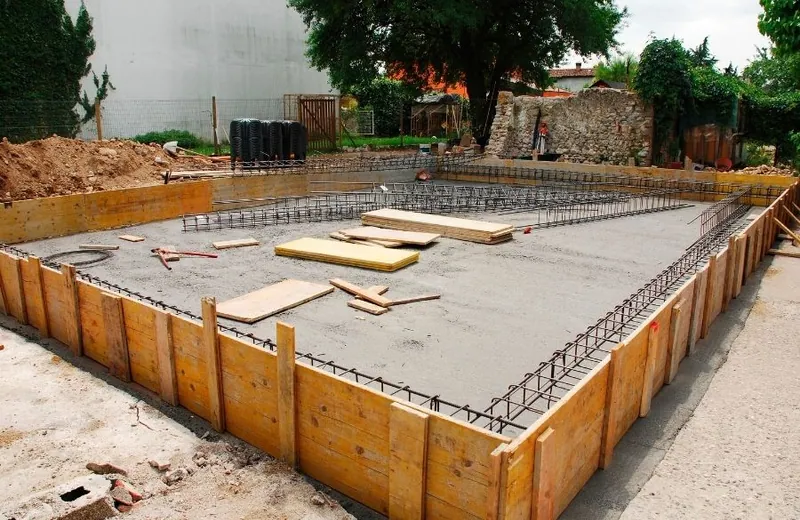
We build new foundations for additions, outbuildings and rebuilds that are designed for expansive clay.

We follow the engineered design, which covers soil prep, forming, reinforcement, piers and pour. We coordinate with the engineer and the city inspections.

New work on former farmland and fill in Mansfield and Venus needs proper soil prep to avoid early settlement.

Best for: Additions, detached garages, workshops and replacement foundations.

Explore

Commercial Foundation Repair

We stabilize foundations and slabs for small commercial, retail and multi-unit properties.

Our approach covers elevation surveys, pier underpinning, slab leveling, crack repair and drainage, with work phased to keep you operating.

Historic downtown storefronts on Main Street and aging strip centers along the Debbie Lane / Matlock corridor sit on the same active clay.

Best for: Property owners and managers with settling buildings or cracked commercial slabs.

Explore
Know The Signs

Common Foundation Problems We See Around Mansfield

Clay doesn't move the same way under every house. Lot slope, tree cover, slab type and plumbing all change how a foundation fails. These are the problems we see most often in Mansfield and nearby cities, roughly from most urgent to least, with the warning signs to watch for.

Under-Slab Plumbing Leak Causing Localized Heave Emergency

A leaking supply or drain line under the slab soaks the clay below it. The saturated clay swells and pushes one area of the slab upward. Meanwhile, the water can wash out support and keep feeding damage until someone finds the leak and fixes it.

Why it's common here

Mansfield's clay reacts hard to water. A slow drain leak can raise a section of floor in weeks. Winter Storm Uri in February 2021 burst pipes across the area, and some of that hidden damage is still surfacing. On top of that, slab movement itself stresses old cast-iron and PVC lines in 30-year-old homes. Leveling a slab can also reveal leaks that were already there, which is why we coordinate pressure or hydrostatic testing with a licensed plumber before and after lifting.

Signs you'll notice
  • Unexplained jump in your water bill
  • Warm or damp spots on the floor
  • Cracked tile or hump in one room
  • Musty smell or mold at baseboards
  • Sound of running water with fixtures off
  • Floor cracks near bathrooms or kitchen
Local patterns

Common in early-'90s homes along the Debbie Lane / Matlock Road corridor and in pre-1970 slab homes in Arlington and Grand Prairie. We see a spike after hard freezes and after heavy repairs done without leak testing.

Our fix: Leak test with a licensed plumber, repair the line, let the soil stabilize, then evaluate whether piers or leveling are needed. That order prevents paying for the same repair twice.

Perimeter Edge Settlement (Edge-Drop) Serious

During long dry spells the clay under your slab's outer edge shrinks, and the beam loses support and drops. Corners and exterior walls sink while the center stays put. You'll see cracking in brick, drywall and trim around the outside of the house.

Why it's common here

Mansfield's summers pull moisture out of the soil along the perimeter first, where the ground is exposed to heat, sun and wind. Triple-digit stretches like those in 2022 and 2023 dried soil several feet down. The perimeter beam moves much more than the slab center, so differential movement builds year after year. Lots with poor grading, missing gutters or bare beds along the foundation dry out even faster.

Signs you'll notice
  • Stair-step cracks in brick mortar
  • Gaps between brick and window frames
  • Doors that stick or won't latch
  • Diagonal drywall cracks above doors
  • Gaps at baseboards or crown molding
  • Visible soil gap along the slab edge in summer
Local patterns

Very common in 1990s–2000s brick-veneer homes in Shadow Ridge, Creekwood and Somerset. It shows up most in late summer, especially on west- and south-facing walls that get the hardest afternoon sun.

Our fix: Install pressed concrete piles or steel piers under the affected perimeter beam, lift to practical level, then add moisture control so the soil stays consistent.

Tree Root Moisture Settlement Serious

Large trees pull hundreds of gallons of water from the soil, and their roots can reach well past the drip line. When they draw moisture from the clay under a corner of the slab, that area shrinks and settles. The result is localized, often severe movement.

Why it's common here

Mansfield's older neighborhoods and creek-side lots are shaded by live oak, pecan, cedar elm and hackberry, and these trees drink a lot during drought. A tree planted 15 feet from the house in 1995 now has a root system that reaches under the slab. Because Mansfield's clay shrinks dramatically as it dries, one thirsty tree can drop a corner while the rest of the house stays stable.

Signs you'll notice
  • Cracking concentrated near one corner
  • Floor slopes toward a nearby tree
  • Brick separation at a single corner
  • Cracked tile in rooms near the tree
  • Deep soil cracks around the tree base
  • Movement worse after dry summers
Local patterns

Frequent in the Pecan Park area, Woodland Estates and mature lots around Walnut Creek Country Club, where big trees sit close to the house. HOA approval is often needed before root barrier work or removal.

Our fix: Underpin the settled corner with piers, then install a root barrier or plan tree work, with HOA coordination where it's required.

Center Heave (Slab Doming) Moderate

After a wet season, moisture builds up under the middle of the slab, where it can't evaporate. The clay swells and pushes the slab's center up into a dome. Interior walls crack, and doors in the middle of the house start binding.

Why it's common here

Mansfield's wet springs, with May often topping 4.5 inches, soak the clay. The center of a slab stays wetter than the edges year-round. Heavy lawn irrigation, poor drainage and plumbing leaks make it worse. Center heave is easy to misdiagnose as perimeter settlement, and that's how homeowners get sold piers they don't need. That's why our floor elevation readings matter.

Signs you'll notice
  • Interior doors rubbing at the top
  • Cracks in interior walls near the center
  • Floor high spot in hallways or living room
  • Cracked tile toward the middle of the house
  • Ceiling cracks on interior walls
  • Problems worsen after rainy months
Local patterns

Shows up in newer Twin Creeks, Hidden Creek and South Pointe homes on regraded farmland with heavy irrigation, and anywhere after record-wet springs like 2015.

Our fix: Confirm with an elevation survey, check for leaks, fix drainage and moisture sources. Selective perimeter lifting may be needed to bring the edges up to match.

Pier-and-Beam Sagging and Failed Shims Moderate

In raised-floor homes, the wood beams rest on piers with shims between them. Over time wood piers rot, block piers settle, shims crush, and beams sag. The result is bouncy, sloping floors and crawl spaces with moisture problems.

Why it's common here

Historic Downtown Mansfield and older parts of Arlington, Everman, Forest Hill and south Fort Worth have pier-and-beam homes from the early 1900s through the 1960s, some still on original wood or concrete block piers. Clay movement shifts the piers, and poor crawl-space ventilation and drainage rot the wood. Decades of re-shimming without fixing the cause make the floor less stable over time.

Signs you'll notice
  • Bouncy or soft floors
  • Floors sloping toward the middle
  • Gaps under interior doors
  • Musty crawl-space odor
  • Standing water or damp soil under the house
  • Cracked or leaning support piers
Local patterns

Concentrated around Main Street and Broad Street downtown, the 1940s–60s blocks of Everman and Forest Hill, and investor flips in central Fort Worth and Arlington.

Our fix: Re-shim and adjust, replace failed piers with concrete pier pads, sister or replace damaged beams, and improve crawl-space drainage and ventilation.

Slab, Garage and Driveway Cracks Minor

Hairline and shrinkage cracks in slabs, garage floors and driveways are common in North Texas concrete. Many are cosmetic, but cracks that widen, offset or let water in can point to movement or invite more damage.

Why it's common here

Clay shrinking under a slab or driveway removes support, and Mansfield's summer heat speeds up concrete drying and soil loss along exposed edges. Garages often show cracks first because they carry vehicle loads and usually have thinner perimeter support. A crack that opens in August and closes in April leads many homeowners to put repairs off.

Signs you'll notice
  • Hairline cracks in garage floor
  • Cracks wider than 1/8 inch
  • One side of a crack higher than the other
  • Gaps at the garage door header brick
  • Driveway sinking near the garage
  • Water seeping through floor cracks
Local patterns

Common in Garden Heights, Willowstone Estates and 2000s subdivisions, especially garages on the low side of sloped lots. Pools and retaining walls in these neighborhoods often show the same seasonal movement.

Our fix: Measure and monitor, then seal or inject cosmetic cracks. Offset or widening cracks get a structural evaluation and leveling or pier support.

Drainage and Erosion on Sloped or Creek-Side Lots Moderate

When water ponds against the foundation or erodes soil away from it, the clay goes through extreme wet-dry cycles right at the beam. This uneven moisture is one of the leading causes of differential movement, and it's very preventable.

Why it's common here

North Texas storms dump a lot of rain fast. Lots near Walnut Creek and Joe Pool Lake, plus hillside lots across Mansfield, funnel water toward homes. Builder grading settles over time, beds get built up against brick, and downspouts dump right at the slab. Then summer drought dries that same soil to cracking.

Signs you'll notice
  • Water pooling near the foundation after rain
  • Downspouts discharging at the slab
  • Soil eroding and exposing the beam
  • Flower beds sloping toward the house
  • Wet spots in the garage after storms
  • Recurring cracks on the uphill side
Local patterns

Typical in Lake Ridge near Joe Pool Lake, The Reserve at Walnut Creek and other creek-side lots, where slope and runoff are steady issues. HOA rules often govern French drains and regrading.

Our fix: Regrade for positive slope, add downspout extensions, French drains or surface drains, and handle HOA submittals so the work gets approved.

Transparent Pricing

How Much Does Foundation Repair Cost in Mansfield?

Foundation repair costs here depend on how much of the home has moved, what type of foundation you have and what your city requires. Here's what drives the price, plus realistic ranges for common North Texas projects.

Typical Project

Settled corner near a mature tree

1990s brick slab home in Creekwood, 5–6 pressed concrete piles plus a root barrier

$3,500 – $7,500
Typical Project

Perimeter edge-drop on a two-story production home

2000s post-tension slab in South Pointe or Twin Creeks, 14–20 piers with engineer letter and permit

$8,500 – $16,000
Typical Project

Pier-and-beam re-level

1950s raised home in Everman or Forest Hill, re-shim, replace several block piers, sister damaged beams

$2,500 – $9,000
Typical Project

Drainage correction on a creek-side lot

Lake Ridge or Walnut Creek-area home, French drain, downspout tie-ins, regrading and HOA submittal

$2,500 – $7,500
Number and Type of Piers Primary Factor

Piers are usually the biggest line item. Pressed concrete piles in the DFW market commonly run about $350–$600 each. Steel piers, which can be driven deeper to firmer strata, often run $1,000–$2,000 each. A corner repair may take 4–6 piers, while perimeter-wide settlement can take 15–30. Your elevation survey decides the count, so you shouldn't pay for piers your house doesn't need.

Foundation Type and Access Primary Factor

Slab-on-grade repair means excavating along the perimeter and sometimes tunneling under the slab for interior piers, which raises cost. Pier-and-beam work is often cheaper when it's limited to shimming and pier pads, but rotted beams or tight crawl spaces add labor. Patios, pools, retaining walls and landscaping near the dig points can also affect access and restoration.

Engineering and Permits Secondary Factor

Mansfield and most neighboring cities expect an engineer's evaluation or repair plan, and many want a post-repair letter. Engineer reports in DFW typically run about $400–$900, with permit fees varying by city. These costs protect your resale value, since buyers and lenders routinely ask for the engineer's letter during a sale.

Plumbing Testing and Leak Repair Secondary Factor

Pre- and post-repair plumbing tests commonly cost $250–$600. If a test finds a leak, a licensed plumber's repair, plus slab breakout or tunneling, can add $1,500–$5,000 or more depending on location and pipe type. Catching leaks before leveling helps you avoid repeat damage.

Drainage and Prevention Work Supporting Factor

French drains, regrading, gutters and root barriers stop the moisture swings that move Mansfield foundations. Expect roughly $1,500–$7,500 depending on lot size, slope and HOA requirements. Adding drainage at the time of repair protects your investment in the piers.

Financing is available, so you can schedule the repair now instead of waiting through another drought cycle. Ask about options when we review your written estimate. For a Mansfield home worth $350K–$600K+, an unresolved foundation issue can scare off buyers or force big concessions. A documented repair with an engineer's letter usually costs far less than the price hit at the negotiating table.

Local Expertise

Why Mansfield Homes Need Foundation Repair More Than Most

In Mansfield, foundation movement isn't a question of if. It's a question of when. The soil, the weather and the way this city grew from a farm town into a 75,000-person suburb all put steady pressure on the concrete under your home. Here's what's driving it.

Expansive Clay and a Feast-or-Famine Climate

Mansfield straddles Tarrant, Johnson and Ellis counties, on clay formed from Cretaceous Eagle Ford Shale and Austin Chalk/Taylor Marl. These vertisols are packed with montmorillonite, a mineral that swells a lot when it's wet and shrinks hard when it's dry. In summer, shrinkage cracks in the yard can be inches wide and several feet deep. Annual rainfall runs about 36–38 inches, but it shows up unevenly: May often brings 4.5+ inches, then July and August bake at 98–100°F or higher. Drought years like 2011, 2022 and 2023 pulled moisture deep out of the ground. The 2015 record-wet year after years of drought shows how fast big swings speed up differential movement. Since the ground never freezes here, shrink-swell is the main force moving your foundation all year long.

A Housing Stock Reaching Prime Repair Age

Mansfield had fewer than 10,000 residents before 1980. Most homes went up during the subdivision booms of the 1990s, 2000s and 2010s, nearly all on post-tensioned or conventionally reinforced slab-on-grade. Brick-veneer production homes from builders like DR Horton, Pulte, Highland and David Weekley make movement easy to spot: stair-step mortar cracks, gaps at window frames, and separation over garage door headers. Thirty-year-old post-tension slabs from the early '90s are now showing tendon and cracking issues. Homes built since 2015 on regraded farmland can settle over fill in their early years. Meanwhile, Historic Downtown along Main and Broad Streets, along with older parts of Arlington, Everman and Forest Hill, still has pier-and-beam homes on wood or block piers that rot and settle.

Permits, Engineers and Resale Paperwork

Mansfield's Building Safety division generally requires a permit for foundation repair. Inspectors expect an engineer's report or repair plan and may ask for a post-repair engineer's letter. Texas doesn't license foundation contractors at the state level, so a Texas-licensed Professional Engineer's evaluation and final letter carry a lot of weight with lenders, insurers and buyers. Each neighboring city, including Arlington, Fort Worth, Grand Prairie, Burleson and Midlothian, runs its own permitting. Some require registered contractors and stamped plans. The TREC seller disclosure form requires you to disclose known foundation repairs, and HOAs in most master-planned communities control drainage work, regrading and root barriers. Texas811 utility locates are required before we dig exterior piers.

Protecting Equity in a Fast-Moving Market

Most Mansfield homes are owner-occupied and valued around $350K to $600K+, so foundation decisions are really equity decisions. In a hot resale market, buyers' inspectors regularly flag foundation movement, and that turns a slow problem into a closing-date deadline. Busy commuters heading to Fort Worth, Dallas and Arlington want fast scheduling and clear reports. Families in older parts of Everman, Forest Hill and south Fort Worth need honest pricing and financing.

Mansfield Foundation Repair Solutions Foundation Repair Company in Mansfield, TX project in Mansfield, TX (1)
Mansfield, TX
Mansfield Foundation Repair Solutions Foundation Repair Company in Mansfield, TX project in Mansfield, TX (2)
6+ Years
Talk to a Local Expert
The Mansfield Foundation Repair Solutions Difference

Why Mansfield Homeowners Choose Us

We Know Mansfield's Soil, Street by Street

Mansfield covers three counties and more than one soil formation. Eagle Ford clays dominate the north and west, and the Austin Chalk transition runs toward Midlothian and Ellis County. That means conditions can change within a single subdivision. We've worked across South Pointe, Creekwood, Twin Creeks, Lake Ridge and Historic Downtown, so we know how creek-side lots, mature-tree lots and new fill lots each behave. That local knowledge helps us place piers where your house actually needs them, not where a generic template says they go.

Bonded and Insured for Your Protection

Texas doesn't license foundation contractors at the state level, so it's on homeowners to check who they're hiring. We're bonded and insured, which protects you and your property while our crew is excavating, lifting and working around your home. We'll gladly provide proof of coverage before work begins. And we're local, so we're not an out-of-town storm-chaser crew that disappears after the check clears. We'll still be here when you call.

Measurements First, No Upselling

The biggest worry we hear is being sold too many piers. Every recommendation we make is backed by floor elevation readings, photos and a written report that shows where movement is and why. If your issue is a drainage problem or a plumbing leak rather than settlement, we'll tell you. Sometimes the right answer is a gutter, a downspout extension or a soaker hose, not a $12,000 pier job. You'll understand your options before you decide.

Permits Pulled, Engineers Coordinated

Mansfield Building Safety generally requires a permit for foundation repair, and inspectors often expect an engineer's report and post-repair letter. Arlington, Fort Worth, Grand Prairie, Burleson, Midlothian and other cities each have their own rules. We handle permit applications, schedule inspections, call Texas811 before digging and work alongside the engineer on plans and final letters. Doing it by the book protects your home sale later, when buyers and lenders ask for paperwork.

Slab and Pier-and-Beam Specialists

Post-tension slabs in 1990s subdivisions and century-old pier-and-beam homes downtown need completely different repairs. Our team handles both: steel and concrete piers for slabs, plus shimming, beam replacement and crawl-space drainage for raised homes. That matters across our service area, where Mansfield's newer slabs sit just miles from the 1940s–60s pier-and-beam neighborhoods of Everman, Forest Hill and Arlington.

Documentation Built for Resale and Insurance

Mansfield's resale market moves fast, and foundation questions can derail a closing. Every job comes with documentation you can share with buyers, lenders or insurance providers. That includes before-and-after elevation readings, photos, permit records and transferable warranty details where available. If you're facing an inspection deadline, tell us up front and we'll prioritize the reports you need.

Flexible Financing for Every Budget

Foundation repair is rarely in the budget, and putting it off usually makes it more expensive. We offer financing so you can fix the problem now instead of waiting for the next drought to widen the cracks. That's helped families from Midlothian to Everman protect their homes without draining savings. We'll walk you through the options alongside your written estimate.

Simple & Transparent

How Our Foundation Repair Process Works

No pressure, no surprises. Here's exactly what happens from your first call to your final paperwork, including the permits and engineer steps that Mansfield and nearby cities expect.

Inspection & Elevation Survey

About 1–2 hours on site, usually scheduled within days
  • Full floor elevation readings throughout the home
  • Exterior check of brick, grading, gutters, trees and drainage
  • Interior review of cracks, doors, tile and trim
  • Photos of every relevant condition

Local note: Summer is our busiest season because drought makes damage worst. Calling early in the season helps you get on the schedule sooner.

Written Report & Repair Options

Typically within a few days of the inspection
  • Clear written report with elevation map and photos
  • Repair options with pier counts and placement explained
  • Itemized pricing and financing options
  • Transferable warranty details where available

Local note: If you're under a closing deadline, tell us. We'll prioritize documentation buyers and lenders ask for.

Engineering, Permits & Utility Locates

Generally 1–3 weeks depending on the city
  • Engineer's evaluation or repair plan where the city requires one
  • Permit application with Mansfield Building Safety or your city
  • Texas811 utility locate before any digging
  • HOA submittals for drainage or landscape work if needed
  • Pre-repair plumbing test when recommended

Local note: Arlington, Fort Worth, Grand Prairie, Midlothian and others each have their own permit rules. We'll walk you through what applies to your address.

Foundation Repair & Leveling

Most residential repairs take 1–3 days
  • Excavation at pier locations with landscaping protected
  • Pier installation and controlled hydraulic lift
  • Real-time monitoring of interior conditions
  • Backfill, compaction and site cleanup

Local note: Heavy spring rain can pause digging in saturated clay. If that happens, we reschedule quickly.

Final Readings, Inspection & Documentation

Same day as completion, with city inspection and final engineer letter following as required
  • Post-repair elevation readings compared to the original survey
  • City inspection and post-repair engineer's letter where required
  • Post-repair plumbing test coordinated when recommended
  • Complete documentation package for your records, buyers or insurer

Local note: Keep this file. Texas TREC disclosures require sellers to disclose foundation repairs, and good documentation makes resale easier.

Trusted Locally

Trusted by Mansfield-Area Homeowners Since 2020

Serving Mansfield Since
2020
Mansfield, TX

Homeowners across Mansfield and nearby cities choose us for straight answers backed by measurements, clean job sites and documentation that holds up at resale.

20-Mile
Service Radius
18
Communities Served
100%
Inspections Include Elevation Readings & Written Report
BondedInsuredFinancing available
Where We Work

Foundation Repair Service Areas Around Mansfield

From our base in Mansfield we serve a 20-mile radius across Tarrant, Johnson, Ellis and southern Dallas counties. Each city has its own soils, housing ages and permit office, and we adjust our approach for every one.

Mansfield, Arlington & the Northeast

MansfieldArlingtonPantegoKennedaleGrand PrairieDuncanville

Fort Worth & Johnson County

Fort WorthForest HillEvermanCrowleyBurlesonJoshua

Ellis County & Southern Dallas County

MidlothianVenusOvillaCedar HillDeSotoGlenn Heights

Not sure if we cover your area? Call (817) 402-2718.

Find Us

Serving Mansfield, TX & Nearby

647 Miller Rd Ste 100, Mansfield, TX, 76063 · Mon-Fri: 7:00 AM - 9:00 PM · Sat-Sun: 7:00 AM - 6:00 PM

MansfieldArlingtonPantegoKennedaleGrand PrairieDuncanvilleFort WorthForest HillEvermanCrowleyBurlesonJoshuaMidlothianVenus
Questions & Answers

Foundation Repair FAQs for Mansfield Homeowners

How much does foundation repair cost in Mansfield, TX?

Most Mansfield slab repairs fall between about $3,500 and $16,000, depending mainly on how many piers your home needs and what type. A single settled corner might need five or six pressed concrete piles. A two-story home with perimeter-wide settlement could need 15 to 20 or more. Pier-and-beam re-leveling often costs less, roughly $2,500 to $9,000. Engineer reports, permits and plumbing tests add a few hundred to a couple thousand dollars. You'll get itemized pricing in your written report, and financing is available.

How long does foundation repair take?

The physical repair on most homes takes one to three days. The full timeline is longer because of the steps around it. Inspection and the written report usually happen within a few days. Engineering, permits and Texas811 utility locates can take one to three weeks depending on your city. After the work, there's a city inspection and, where required, a post-repair engineer's letter. Summer is the busiest season in Mansfield because drought makes damage worst, so booking early helps. If you're facing a closing deadline, let us know right away.

Do I need a permit for foundation repair in Mansfield?

Generally, yes. Mansfield's Building Safety division typically requires a permit for foundation repair, and inspectors often expect an engineer's report or repair plan, sometimes followed by a post-repair engineer's letter. Neighboring cities like Arlington, Fort Worth, Grand Prairie, Burleson and Midlothian each have their own rules, and some require stamped plans and registered contractors. We handle permits and inspections for you. Be cautious of any crew that suggests skipping the permit, because missing paperwork can cause problems when you sell.

Is that crack normal settling or a real foundation problem?

In Mansfield, some seasonal movement is normal. Hairline cracks that open in August and close in April are common in our clay. The warning signs are cracks wider than about 1/8 inch, cracks where one side sits higher than the other, stair-step brick cracks, doors that suddenly stick, and floors you can feel sloping. The only reliable way to know is to measure. Our inspection includes floor elevation readings that show whether your slab is within a reasonable tolerance or actively moving.

When should I act on foundation problems?

Act as soon as you see cracks spreading, doors binding or floors sloping, and right away if you also notice a high water bill or damp floors, which can mean a slab leak. Clay movement adds up over seasons, so waiting through another drought often means more piers and more interior repairs later. Get an inspection before listing your home too, since buyers' inspectors regularly flag foundation movement and it's better to control that conversation with your own documentation.

How can I prevent foundation problems in Mansfield's clay soil?

Keep soil moisture consistent. During drought, run a soaker hose 12 to 18 inches from the foundation so the clay doesn't shrink away from the beam. Install gutters and extend downspouts several feet from the house. Make sure the soil slopes away from the slab, and don't pile beds against the brick. Large trees close to the house may need a root barrier, which often requires HOA approval. Fix plumbing leaks quickly, and avoid heavy irrigation in one area while another stays dry.

Should I choose steel piers or concrete piles?

Both are standard in North Texas and follow common engineering guidelines. Pressed concrete piles cost less and work well for many Mansfield slab homes. Steel piers can be driven deeper to more competent strata, which can help where active clay is thick, though they cost more per pier. Drilled bell-bottom piers are another option some engineers specify. We'll explain which method fits your soil and home, and why, rather than defaulting to the most expensive choice.

Will the repair affect my home sale or insurance?

A properly documented repair usually helps. Texas TREC seller disclosures require you to disclose known foundation repairs, so buyers will ask. With before-and-after elevation readings, photos, permit records, an engineer's letter where required and transferable warranty details where available, you can show the problem was fixed the right way. We give you that full package at completion so you can share it with buyers, lenders or your insurance provider.

Schedule Your Mansfield Foundation Inspection Today

Cracks don't heal when the rain comes back. They just wait for the next drought. Get real measurements and honest options now, before small movement turns into a big repair.

  • Floor elevation readings across your entire home
  • Photos and a clear written report you can share
  • Repair options with itemized, upfront pricing
  • Help with permits, engineers and Texas811 locates
  • Transferable warranty details where available
  • A bonded and insured local crew
  • Financing available

Serving Mansfield and a 20-mile radius, including Kennedale, Venus, Everman, Midlothian, Pantego, Arlington, Burleson and Fort Worth.

Suspect a slab leak, with a sudden water bill spike, warm floors or a new hump? Shut off your water at the main and call us so we can coordinate testing quickly.

Bonded • Insured

Call (817) 402-2718 Free Estimate